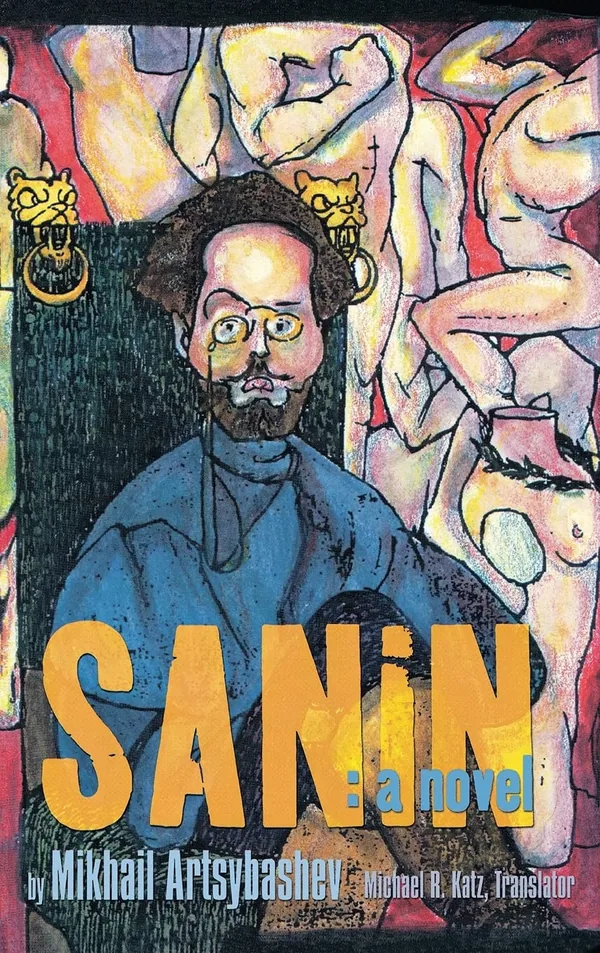
The novel is set in a provincial Russian town and features typical characters of the time, including an exiled student, a womanizing officer, a doctor, a few young ladies, and Vladimir Sanin himself, a young man without a specific occupation. The hero’s rejection of morality rooted in Christian teachings and his advocacy for individualism are contrasted in the novel with all other heroes who adhere to outdated beliefs and ultimately face self-destruction: Sanin will witness several tragic fates among the people around him, including his sister’s, but he is the only one who will be able to save himself for future life, which will illustrate the main author’s philosophical take:
“Life is a struggle between existence and death, and nothing more; the highest good of life is the achievement of personal freedom; true freedom is the free development of creative forces”.
The novel’s impact on young Russians in the early 20th century was profound. “Sanin” sparked numerous critical essays and movements that supported the neo-nihilist ethic and the free-love ideas promoted by Artsybashev and his hero. Additionally, because of the novel’s open-ended nature, many efforts emerged to finish it or publish sequels on a scale never seen before in Russian literature. One of the most important (and much unexpected) effects the novel had on the literary process in Russia was the emergence of several women’s voices in literature, which were inspired to overcome self-censorship and were finally heard.