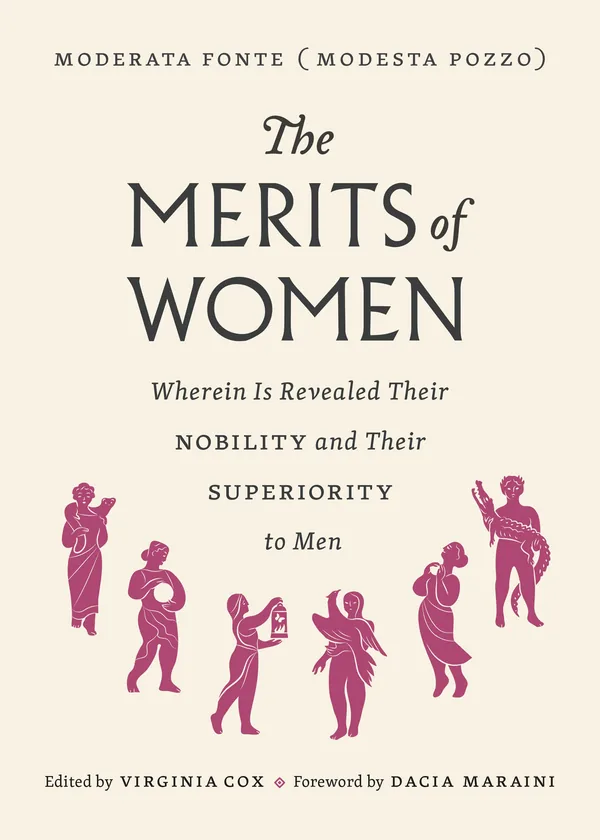
One of the most significant surviving texts addressing female emancipation in late 16th-century Italian society: a posthumously published work by Venetian poetess, born Modesta Pozzo, written as a conversation (a literary dialogue) among seven Venetian noblewomen who, over two consecutive days, meet in a garden, shielded from the eyes and ears of men, to discuss the status of women of their time (the garden is likely imaginary, though envisioned as belonging to one of the villas facing the Grand Canal).
Each female character of “The Merits” represents a typical life situation for Italian women of that era—circumstances in which their lives were, in one way or another, constrained by men—so they discuss autonomy and happiness, as well as the emotional bonds that render them “voluntary slaves” to men. On the second day, they also touch on topics such as astrology and medicine, concluding their gathering with the hope that, one day, men might show at least some understanding.
Moderata completed this work just one day before her death in 1592: sadly, she passed away while giving birth to her fourth child, at the age of only 37. The modern English edition of “The Merits” is prefaced by a brief biography of Moderata, written by her guardian, her cousin’s husband Giovanni Niccolò Doglioni, who had taken her into his household alongside his fiancée, arranged her marriage to a reliable lawyer, and remained an admirer of her talents throughout his life. He supported her literary interests and helped publish all her works—including collections of poems and sonnets, as well as her two major feminist treatises, “The Merits” among them. More than half of the Moderata’s biography he wrote is devoted to lamenting her premature death and the fact that her children were left without such a unique mother and mentor; it also brims with admiration for how Moderata, in defiance of stubborn, deep-seated prejudices, managed to prove that a woman can be much more than just a mother and a wife.