Born Elsie Dunn in Clarksville, Tennessee, in January 1893, Evelyn Scott was a prominent modernist poet, writer, and playwright, considered an early star of the so-called Southern Renaissance.
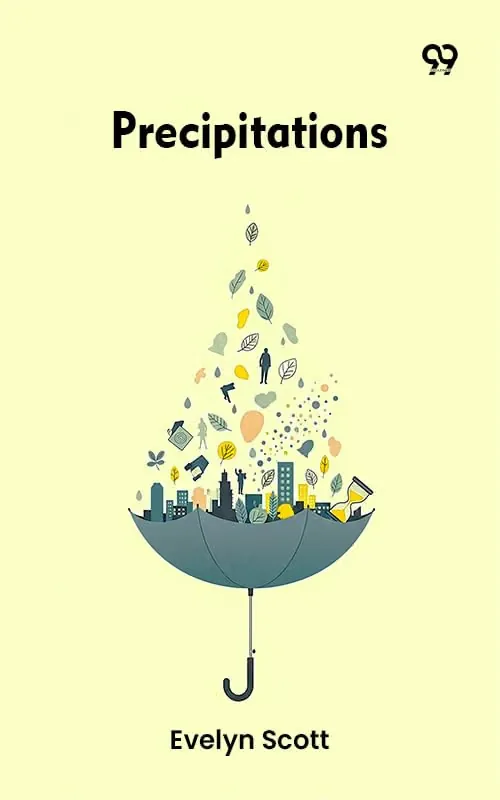
“Precipitations,” her debut poetry collection, was published by Nicholas L. Brown in 1920, just a year before her first novel in the famous Farley family trilogy, “The Narrow House.” It contains a few thematically distinct series of brief, stylistically experimental free-verse poems that approach the mundane through fragmented impressions, unusual imagery, and detachment, capturing a specific moment like a candid, spontaneous shot.
The first section, devoted to modern urban life, opens with a depiction of early 20th-century Manhattan, its streets, bridges, crowds, artificial lighting, and a sense of uncertainty. The second major section is devoted to nature, exploring landscapes, the changing seasons, and the sensations and cultural allusions that arise from engaging with every possible natural phenomenon.
The third section turns to portraits of individuals and social groups—ranging from children and the elderly to women and people of color—and the final section, devoted to Brazil, explores life in the tropics and on ranches, featuring religious imagery while also addressing themes of mortality and renewal.
Although Evelyn Scott’s work is largely forgotten today, her poetry made a distinctive contribution to early American modernism: it combined innovative free verse with psychological depth and challenged established literary and social boundaries.